
Most people spend more time planning a road trip playlist than checking whether their car can actually handle the drive. You’ve got the route mapped, the snacks packed, and the dates locked in. But the vehicle sitting in your driveway might have a few things to say about those plans.
This guide covers the most telling signs your car is not road trip ready, what each one actually means, and what your options are before you commit to hundreds of miles on the road. Whether you’re heading out for a vacation, relocating, or picking up a vehicle from another city, knowing what to look for can save you from a stressful breakdown far from home. If you ever find yourself stuck in Memphis or need help moving a vehicle that shouldn’t be driven, Trustworthy Towing Service Memphis is reachable at (901) 401-4025.
Why Long Drives Are Harder on Your Car Than You Think
Daily commutes don’t push a car very hard. Short trips at low speeds, frequent stops, and familiar roads rarely expose mechanical issues that are quietly developing. A long highway drive is a completely different story.
Sustained highway speeds put continuous demand on your engine, cooling system, tires, and brakes in ways a 20-minute commute never would. Heat builds up over time. Components that are borderline under normal conditions can fail under that kind of sustained load. That’s why a car that seems fine around town can surprise you two hours into a long haul.
Taking a few minutes to check for the signs below before you leave is one of the most practical things you can do for your trip.
7 Signs Your Car Is Not Road Trip Ready
Sign 1: Your Check Engine Light Is On
A lot of drivers treat the check engine light like background noise, especially when the car still seems to run normally. That approach carries more risk on a long drive.
The light can indicate anything from a loose gas cap to something more serious like a failing oxygen sensor, a misfiring engine, or a catalytic converter issue. A free diagnostic scan at any auto parts store will pull the trouble code and give you a starting point. Getting it read before a long haul is a small investment of time that can prevent a much bigger problem down the road.
Sign 2: Your Tires Are Worn, Cracked, or Improperly Inflated
Tires are your only contact with the road, and their condition matters more at highway speeds than at city speeds. Here’s what to check before you go:
- Tread depth: Insert a penny into the tread groove with Lincoln’s head facing down. If you can see the top of his head, the tread is too worn for safe highway driving.
- Sidewall condition: Look for cracking, bulging, or bubbling, which can indicate age-related deterioration or internal damage.
- Tire pressure: Check the recommended PSI in your owner’s manual or on the sticker inside your driver’s door. Cold weather causes pressure to drop, which is worth knowing if you’re departing on a cool morning.
A blowout at highway speed is significantly more dangerous than one at city speed, so this check is worth the five minutes it takes.
Sign 3: Your Brakes Feel or Sound Off
Squealing, grinding, a pedal that feels soft or spongy, or a pull to one side when stopping are all signs that your brakes need attention before a long trip. Brakes that are marginal in stop-and-go traffic can fade under the sustained demands of highway driving, especially on long downhill stretches. If anything feels off when you brake, have them inspected before you leave.
Sign 4: Your Battery Is More Than Three Years Old
Most car batteries have a lifespan of three to five years. If yours is in that range and you don’t know its exact age, it’s worth getting tested before a long drive. Many auto parts stores offer free battery testing, and it takes less than ten minutes.
Heat is a real battery killer, and Memphis summers are tough on them. A battery that starts your car reliably every morning might still be running low on reserve capacity, which can leave you stranded the moment conditions get more demanding.
Sign 5: Your Fluids Are Low or Overdue for a Change
Fluids keep your vehicle’s systems running under load, and their condition matters more over long distances. Before a road trip, check the following:
- Engine oil: Low or dirty oil increases friction and heat in the engine.
- Coolant: Keeps the engine from overheating, which becomes a genuine risk on extended highway drives.
- Transmission fluid: Supports smooth gear changes under sustained load.
- Brake fluid: Degrades over time and can absorb moisture, which affects braking performance.
If any of these are low or haven’t been changed in a while, take care of them before you go rather than after something goes wrong.
Sign 6: Your Car Has Been Making a Noise You’ve Been Ignoring
Most drivers have a noise they’ve decided to live with. A faint knock here, an occasional rattle there, a subtle whine under acceleration. These sounds have a way of becoming much more noticeable under highway load.
The sustained RPMs and continuous demand of long-distance driving can turn a small problem into a larger one. If your car has been trying to tell you something, a road trip is not the right time to find out what it was.
Sign 7: Your Car Has High Mileage and No Recent Service History
A high-mileage vehicle isn’t automatically unreliable, but one without recent maintenance or documented service history is a genuine risk on a long drive. This applies especially to recently purchased used vehicles or cars that have been sitting for an extended period.
Long drives reveal problems that short ones conceal. Without knowing what’s been maintained and what hasn’t, you’re making a judgment call with incomplete information.
So Your Car Showed One of These Signs. Now What?
Finding one of these signs doesn’t mean your trip is cancelled. It means you have three reasonable options to consider.
The first and most straightforward is to get it looked at before you go. Many issues on this list are quick and inexpensive to address if caught early. A mechanic visit a week before your trip is a far better scenario than a breakdown three states away.
The second option is to postpone the trip until the vehicle is in better shape. This isn’t always convenient, but it’s almost always cheaper than dealing with a roadside breakdown in an unfamiliar place.
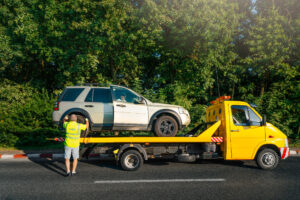
The third option is to arrange transport instead of driving. If the car isn’t safe to drive long distances, or if the repair costs don’t make sense relative to the vehicle’s value, having it transported by a flatbed tow truck is a practical and increasingly common solution. Flatbed transport keeps all four wheels off the road, which is particularly useful for vehicles that are non-running, have existing mechanical concerns, or shouldn’t be adding more miles to the odometer. At Trustworthy Towing Service Memphis, we handle long distance towing for situations exactly like this. If you’re in the Memphis area and need to move a vehicle safely, you can reach us at (901) 401-4025.
A Road Trip Should Be the Adventure, Not the Breakdown
The signs covered in this article are not meant to talk you out of a road trip. They’re meant to help you make a smarter call before you leave. A quick pre-trip check can be the difference between a smooth, enjoyable drive and a frustrating situation hundreds of miles from home.
Check the obvious things. Take seriously what your car has been telling you. And if the vehicle isn’t ready for the miles ahead, know that getting it transported safely is a perfectly reasonable choice, not a last resort.
Trustworthy Towing Service Memphis provides long distance towing and flatbed transport for drivers and vehicle owners across the Memphis area. Reach us at (901) 401-4025 for straightforward, reliable help when you need it.